
Link Building ROI: How to Measure the Return on Your Link Building Investment
 Written by Alistair MacLeod

How to Calculate Link Building ROI
A link building ROI formula compares the revenue attributed to the campaign with the total campaign cost. The standard version reads: ROI = (attributed revenue – campaign cost) / campaign cost, expressed as a percentage or as a multiple of the spend. Because the numerator depends on attribution, treat the output as a judgment framework rather than a precise instrument; two teams using different attribution windows can reach different numbers from the same campaign.
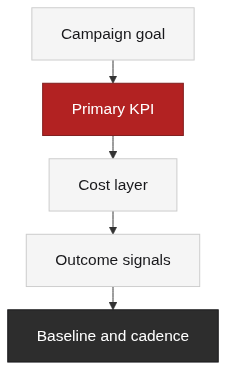
Know how to calculate the ROI before the campaign begins, not after the first report lands. Record the full cost side first: agency fees or internal time, content production, outreach tools, and any assets created for placements. A campaign cost that misses the internal hours will flatter the result, while a cost that includes unrelated overhead will bury a healthy return. The same discipline applies to the revenue side, where the baseline and the attribution window decide how much credit the links can take.
Example ROI Calculation
A hypothetical example makes the formula concrete. Imagine a campaign that costs a set amount and is attributed revenue above that cost over the agreed window; the difference divided by the cost gives the return multiple, and the same multiple expressed as a percentage is the ROI. Change the attribution window in the example and the number moves, which is why the window belongs in the formula’s documentation. Keep the example clearly hypothetical so nobody mistakes an illustration for a client result.
The Cost-to-Outcome Framework
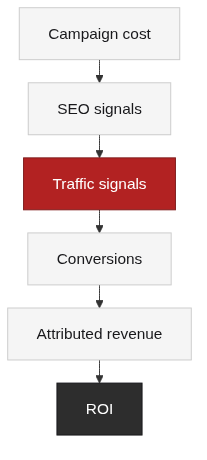
The cost-to-outcome framework links campaign cost to the SEO, traffic, conversion, and revenue signals the campaign should produce, so the link building ROI judgment is made across the whole chain instead of from a single dashboard. Define each outcome layer before the campaign starts: what the links should move in search, how that should show up in traffic, which conversions the visitors should drive, and how the revenue gets attributed. A framework planned in advance stays consistent when the first numbers are noisy.
Start with the layers you can measure reliably, because a small team cannot track everything at once. Many campaigns begin with SEO and traffic signals, then add conversion and revenue attribution as the data pipeline matures. The order matters less than the baseline: each layer needs a recorded starting point and a review cadence, or the framework becomes a description of the past instead of a plan. When the link layer needs standard fields, the data structures in Semrush’s Backlink Audit documentation are a useful reference [3].
SEO Signals That Show Link Building ROI
SEO signals such as rankings, organic visibility, and referring domain growth show whether the links changed the site’s organic position, and they are usually the first layer to move. Rankings are the closest measurable outcome of link building for a specific page, but only when read against a baseline and a time window; a single snapshot proves nothing about trend. Referring domain growth shows whether outreach produced new sources or recycled the same ones, and the referring domains vs backlinks guide explains why breadth and volume measure different things.
These signals are inputs to a link building ROI judgment, not the final number, because they do not yet prove revenue. Authority and trust scores belong here as directional checks: they estimate the strength of the pages that received links, they can disagree between tools, and no decision should rest on one score. Compare every SEO signal with the baseline and the campaign time window, record the collection date, and track link-change fields the way the audit workflow Ahrefs documents suggests [4].
Traffic Signals for Link Building ROI
Traffic signals measure whether the links brought qualified visitors, including referral sessions and organic sessions, and they expose the gap between links that move rankings and links that change behavior. A placement can pass the SEO layer and still fail on traffic: a high-authority page that nobody clicks helps the profile but not the business goal. Filter traffic by source and landing page so the report shows which links actually delivered visitors, and check engagement such as time on page and pages per session before declaring a link successful.
Raw session counts mislead when the audience is wrong. A placement on a busy but irrelevant page can produce volume and convert badly, so pair the traffic layer with the relevance of the linking page and judge every placement before counting its traffic. The high-quality backlinks evaluation guide walks through the quality checks that keep weak placements out of the result, and Google’s spam policies describe which patterns count as manipulative [1].
Conversion Signals That Connect Links to Revenue
Conversion signals connect links to revenue by measuring how referral visitors behave on the site, which makes them the bridge between traffic and the business outcome. Track conversions, lead quality, and the pages the links support, with an attribution window defined in advance so the same visitor is not counted twice. Weight relevance when interpreting which links drove the conversion signals, because a topically aligned placement converts differently from a broad one, as the link relevance guide explains.
High traffic with low conversion usually points to a page or offer problem, not a link problem, so check the landing page and the anchor before blaming the placements. Lead quality matters as much as conversion rate: a campaign that converts slowly but attracts the right accounts can still justify the spend. Record the conversion definition and how you attribute the revenue next to the number, because a metric that cannot be reproduced has no place in an ROI claim.
How to Attribute Revenue and Judge Link Building ROI
Attribution is the hardest part of link building ROI because one visitor can pass through several channels before buying, and each tool assigns credit differently. Document the attribution model and the window used so the ROI number can be reproduced next quarter, and state what the model cannot prove: when a risky link cannot be removed through outreach, the disavow workflow documented by Google Search Console [2] marks the boundary of what measurement alone can fix.
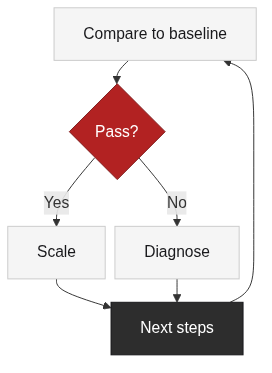
Judge ROI against the campaign goal, because a brand campaign may trade short-term return for long-term authority, while a performance campaign needs the revenue to appear inside the agreed window. When the next question is where the budget goes, connect the findings to a backlink gap analysis guide to prioritize the gaps worth filling. Monitor for unnatural and risky backlinks alongside the return signals, so a strong ROI number does not hide a profile risk that will cost more later.
FAQ
References
Google Search Central, “Google Search Essentials – Link spam”: https://developers.google.com/search/docs/essentials/spam-policies
Google Search Console Help, “Disavow links to your site”: https://support.google.com/webmasters/answer/2648487
Semrush Knowledge Base, “Backlink Audit”: https://www.semrush.com/kb/859-backlink-audit
Ahrefs Blog, “Backlink Audit: The Complete Guide”: https://ahrefs.com/blog/link-audit/