
Link Building for Restaurants: How to Earn Relevant Local Backlinks
 Written by Warren Reed
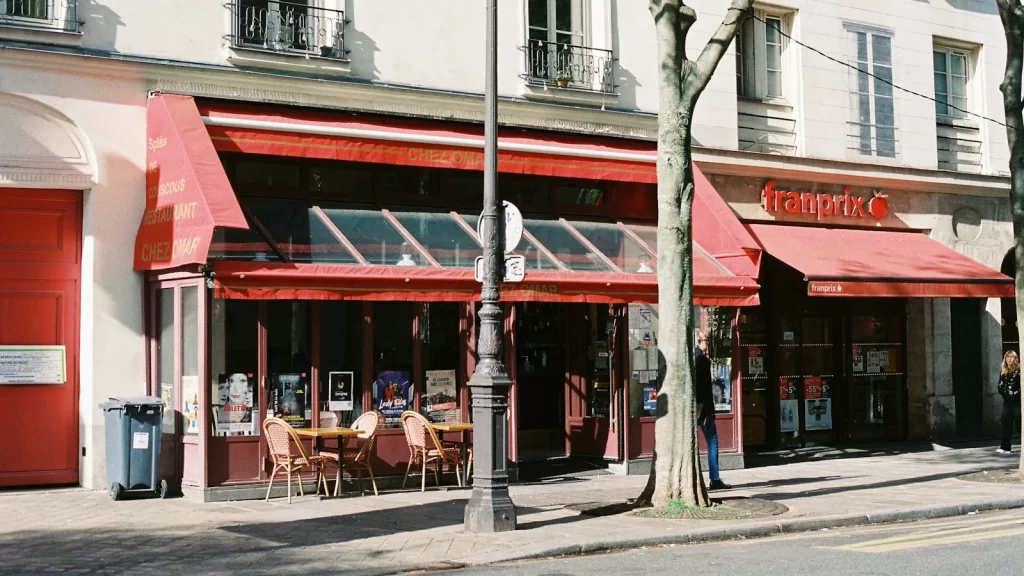
Link building for restaurants is the practice of earning links from real local food media, city guides, suppliers, community organizations, and event organizers that point back to your restaurant's website. Unlike generic link building, its value is tied tightly to your geography, your actual customer base, and the local business environment you operate in. For a neighborhood restaurant, a link from a genuine city food publication, a community organization, or a supplier's partner page can matter more than a link from a high-authority website that has nothing to do with dining or your city.
This guide is written for restaurant owners, restaurant marketing managers, multi-location F&B brands, local marketers, and agencies serving restaurants. It answers one practical question: if you already have a website and want more relevant local links, which opportunities are actually worth pursuing — and how do you tell a legitimate citation apart from a low-quality link? It also untangles a common source of confusion: the difference between local citations, your Google Business Profile, customer reviews, and backlinks.
What Link Building for Restaurants Really Means
flowchart TD
    S0["Start: link building for restauran…"]
    S1["1. Local food media and city lifestyle sit…"]
    S0 --> S1
    S2["2. City travel guides and local recommenda…"]
    S1 --> S2
    S3["3. Real local business partners — supplier…"]
    S2 --> S3
    S4["4. Food events and community organizations…"]
    S3 --> S4
    S5["5. Original content on your own site that…"]
    S4 --> S5
    Done["Outcome: What Link Building for Restaurants Real…"]
    S5 --> Done
Restaurant link building is narrower than general link building, and it is narrower than general local SEO. It focuses on the specific places where a restaurant can realistically earn a link: the food writers who cover your city, the guides that recommend where to eat, the farms and bakeries you actually buy from, and the community events you actually take part in.
A plain definition
A backlink is a clickable link on another website that points to your restaurant's site. For restaurants, the links that matter most usually come from:
- Local food media and city lifestyle sites that cover dining.
- City travel guides and local recommendation resources.
- Real local business partners — suppliers, farms, bakeries, and neighboring brands.
- Food events and community organizations you genuinely participate in.
- Original content on your own site that others choose to cite.
The common thread is that these are real relationships and real local context, not purchased placements.
Why restaurant link building is tied to geography and real customers
A restaurant's audience is local (or, in a tourist city, visitors who are physically there). That makes regional relevance the single most useful filter when judging a potential link. A link from a publication that writes about your city's food scene is relevant to your customers and to search engines trying to understand who you serve. A link from an unrelated high-authority site with no connection to your city or cuisine adds far less.
Industry analysis of restaurant backlink sources consistently finds that restaurant links concentrate around local food media, "best of" roundups, city guides, food bloggers, and the reservation or delivery platform profiles a restaurant already uses [2]. That concentration is a signal: the restaurant link ecosystem is built around local coverage, so that is where the realistic opportunities live.
Setting honest expectations
Backlinks are one signal among many — not the single or decisive driver of local rankings. Google states that local results are based primarily on three factors: relevance, distance, and prominence [1]. Completing your Google Business Profile, keeping your business information accurate, earning reviews, and maintaining useful on-site content all feed into those factors alongside links.
That means link building should be framed as one part of a broader local presence, not a shortcut. No fixed number of backlinks guarantees a spot in the Google Map Pack. Treat links as supporting evidence that your restaurant is a recognized part of its community, and expect the effect to compound over months rather than days.
How this guide differs from a generic Local SEO guide
Most local SEO guides apply to any local business — a dentist, a plumber, a law firm. This one stays focused on the restaurant-specific link opportunities: food media, culinary suppliers, city tourism resources, food events, and restaurant content assets. Menu optimization, structured data, Google Business Profile setup, and review management appear here only as brief background, because the through-line is earning relevant backlinks.
Which Types of Sites Are Actually Worth Pursuing
flowchart TD
    S0["Start: link building for restauran…"]
    S1["1. Food-creator collaborations — writers a…"]
    S0 --> S1
    S2["2. Local food media and city lifestyle sit…"]
    S1 --> S2
    S3["3. City travel guides and local recommenda…"]
    S2 --> S3
    S4["4. Real local business partnerships"]
    S3 --> S4
    S5["5. Food events and community participation"]
    S4 --> S5
    Done["Outcome: Which Types of Sites Are Actually Worth…"]
    S5 --> Done
Before you build a target list, decide which categories of sites make sense for your restaurant. The categories below are the realistic sources of relevant restaurant links; the priority among them shifts depending on your restaurant type.
The main restaurant link sources
- Local food media and city lifestyle sites — outlets that genuinely report on dining in your city.
- City travel guides and local recommendation resources — tourism organizations, city guides, and lifestyle content aimed at visitors or specific audiences.
- Real local business partnerships — suppliers, farms, bakeries, other local brands, event organizers, and community institutions you actually work with.
- Food events and community participation — festivals, charity drives, market events, and community celebrations.
- Original content with shareable value — signature ingredients, culinary culture, menu stories, local food traditions, or authorized recipes.
- Food-creator collaborations — writers and creators who truly cover local dining.
- Legitimate industry resources and business directories — chambers of commerce, local business platforms, and industry bodies.
Why priorities differ by restaurant type
Not every restaurant should chase the same list. An independent café, a family-run restaurant, a fine-dining establishment, a tourist-city restaurant, and a multi-location chain each have a different opportunity mix — and a different set of relationships they can draw on.
A quick priority map
Use the table below as a starting point, then adjust it to your own real relationships and service area. No single list applies to every business.
| Restaurant type | Priority opportunities | Secondary | Low priority / cautious |
|---|---|---|---|
| Independent café | Local lifestyle content, community events, supplier partnerships | City guides | Fine-dining review media |
| Family-run restaurant | Community organizations, local chamber, local media coverage | Travel guides | National roundups |
| Fine dining | Food review media, chef stories, industry awards | City guides | Generic directories |
| Tourist-city restaurant | Tourism organizations, city guides, lifestyle content | Food media | Purely local community pages |
| Multi-location chain | Industry bodies, chambers of commerce, regional media | Per-city guides | Single-location community events (scattered) |
7 Restaurant-Specific Ways to Earn Relevant Local Backlinks
These seven methods map to the real scenarios a restaurant faces. Each one comes with a boundary: what you can legitimately do, and what you should not do.
1. Local food media and city lifestyle sites
Identify outlets that genuinely report on local dining — critics, food bloggers, community publications, and city lifestyle sites. When you evaluate one, look at three things: does it actually cover restaurants in your area, is its content regionally relevant to your service city, and who reads it?
Legitimate editorial opportunities often involve a real reason to be written about: a new opening, a menu update, a chef story, or an event with genuine public interest. What you cannot do is guarantee coverage. A news pitch is a request, not a purchase, and many pitches will not result in an article — that is normal. As one restaurant-focused analysis puts it, the opportunity most restaurants miss isn't lack of interest from writers, it's that they never reach out at all [2].
2. City travel guides and local recommendation resources
If your restaurant suits tourists or a specific audience, look for tourism organizations, city guides, genuine community recommendation pages, and relevant lifestyle content. These can be strong sources of relevant links because they connect directly to where your customers are.
The critical distinction here is between three different things:
- Editorial recommendations — a writer or editor chooses to include you.
- Business directories — a structured listing, often with no editorial judgment.
- Paid advertising — a sponsored placement.
Buying a fake "Top Restaurants" ranking is not a link building strategy; it is paid advertising dressed up as editorial, and it can violate search engine guidelines if the link passes ranking credit without disclosure [5].
3. Real local business partnerships
You likely already have real commercial relationships: a produce supplier, a local farm, a bakery, a coffee roaster, another local brand, an event organizer, or a community institution. Check whether these partnerships have a reasonable public mention or citation opportunity — a partner page, a supplier spotlight, a joint event listing.
Genuine relationships have long-term value because they are durable and repeatable. What to avoid is building a large network of irrelevant cross-links purely to exchange links. Analysis of restaurant backlink sources shows that locally relevant editorial mentions and supplier or community collaborations tend to outperform generic directory links [6].
4. Food events and community participation
If your restaurant genuinely takes part in a food festival, a charity drive, a market event, or a community celebration, that participation can earn mentions from organizers, regional media, or event pages. These are relevant because they connect your restaurant to the community it serves.
The boundary is honesty: participation and the resulting link opportunities must be real. Publishing a press release about a sponsorship you did not make, or claiming a festival appearance you did not have, is not a strategy — it is a fabrication that damages trust and offers no durable value.
5. Original content with shareable value
Depending on your positioning, you can create content around signature ingredients, culinary culture, the story behind a menu, local food traditions, or an authorized signature recipe. Specific, useful, locally rooted content earns links more naturally than generic food posts, because it gives writers and community sites something concrete to reference.
The contrast matters: publishing a steady stream of vague "food blog" articles rarely attracts citations, while one genuinely useful piece — a guide to a local ingredient, a documented regional dish, a behind-the-scenes story — gives other sites a reason to link to you.
6. Working with food creators and content authors
Identify writers and creators who truly cover local dining, provide accurate restaurant information (name, address, phone, hours, website), and respect their independent judgment. There are three distinct modes of engagement, and they should not be blurred:
- Editorial visits — a writer covers you on their own editorial terms.
- Commercial partnerships — a paid or contracted collaboration.
- Paid promotion — advertising.
If you provide a complimentary meal or compensation, be aware of applicable advertising disclosure requirements. The FTC's Endorsement Guides, revised in June 2023, require any endorser to clearly and conspicuously disclose a material connection with the brand — including payment, free products, commissions, or a personal relationship [4]. A complimentary meal offered for honest coverage is standard practice as long as the relationship is disclosed and you are not paying for a guaranteed positive review [2]. What you must not do is disguise a paid experience as an independent recommendation.
7. Legitimate restaurant industry resources and business directories
Some legitimate industry bodies, local chambers of commerce, or city business platforms offer genuinely useful business information pages. These can be worth having — they help customers find you and can support your overall local presence.
But not every directory offers a backlink worth pursuing, and not every citation is an SEO backlink opportunity. Many listings contain only your name, address, and phone number with no link at all. Treat directory work as hygiene and selective opportunity, not as a volume game.
Local Citations vs. Google Business Profile vs. Reviews vs. Backlinks
These four signals get mixed together constantly, and that confusion leads to bad decisions. They are related, but they are not the same thing, and they should not be collapsed into a single metric.
The four signals explained
- Local citations are online mentions of your restaurant's NAP data — name, address, and phone number. Local citations are a known component of any successful local SEO strategy, and their impact has been found to extend into AI and LLM contexts [3]. NAP consistency across listings matters because inaccurate data confuses both search engines and customers [3].
- Google Business Profile is your restaurant's official business listing on Google. You create and maintain it yourself, and it feeds directly into the relevance, distance, and prominence factors Google uses for local results [1].
- Customer reviews are the ratings and reviews customers leave after a real visit. They are a trust and conversion signal, not a link.
- Backlinks are clickable links from other websites pointing to your site. By definition, a backlink is a link.
A short comparison table
| Signal | What it is | How it arises | Always contains a link to your site? | Counts as an SEO backlink opportunity? |
|---|---|---|---|---|
| Local citation | An online mention of your NAP (name/address/phone) | Directories, platforms, chambers, industry bodies enter it | Not always — many are NAP only, no link | Not always; only some are backlink opportunities |
| Google Business Profile | Your official Google business listing | You create and maintain it | The profile itself is not a backlink | No — it is one local ranking signal |
| Customer reviews | Ratings and reviews left by diners | Real customers leave them after a visit | No | No — it is a trust and conversion signal |
| Backlink | A clickable link from another site to yours | Editorial mentions, partnerships, events, content citations | Yes (a link is the definition) | Yes |
Why mixing them into one metric leads to bad decisions
If you count citations as if they were backlinks, you will overvalue listings that carry no link at all and undervalue the editorial mentions that actually pass relevance. If you treat reviews as a link-building task, you will chase the wrong outcome. And if you assume your Google Business Profile "is" your backlink strategy, you will miss the earned mentions that signal community recognition. Keep the four signals separate, measure them separately, and you will make better decisions about where to spend effort.
A Practical Prospecting and Qualification Process
Earning relevant links is a repeatable process, not a one-off burst of outreach. The sequence below moves from defining your target to verifying the result.
The eight-step prospecting flow
- Define your service city and target guests. Who are you trying to reach, and where are they?
- List your real business relationships and community participation. Suppliers, partners, events, organizations — the relationships you already have.
- Find resources about your city, cuisine category, and local events. Food media, city guides, tourism pages, event organizers.
- Review the relevant page content. Is it genuinely about local dining?
- Judge whether a legitimate listing or editorial opportunity exists. Is there a real reason for you to be included?
- Prepare accurate restaurant details. NAP, hours, and website URL, all consistent.
- Contact the right editor or organizer. A specific person, not a mass blast.
- Verify the final citation. Confirm the link is live and points to your site.
The pre-outreach qualification checklist
Before you send anything, run these seven checks:
- Does the page genuinely cover local dining, rather than being a generic aggregator?
- Does the page's regional relevance match your service city?
- Is it an editorial recommendation, a business directory, or a paid ad? You must know which.
- Is there a legitimate reason for inclusion — a new opening, menu update, chef story, or real event?
- Are your restaurant details (NAP, hours, website URL) accurate and consistent?
- Are you contacting the right editor or organizer, rather than mass-emailing?
- Can the final citation be verified — is the link live and pointing to your site?
A fictional teaching example
The following is an illustrative example only. It describes a reasoning process, not a real project, and it makes no claim about links earned, rankings achieved, or customer growth.
Imagine an independent restaurant in a tourist city. Working through the process above, it might identify three plausible citation opportunities:
- A local travel guide. The city's tourism resource publishes a dining section aimed at visitors. The restaurant checks whether the guide is edited (not just a paid listing), whether it covers its cuisine category, and whether there is a genuine reason to be included — for example, a recently updated seasonal menu. It prepares accurate details and contacts the guide's editor.
- A community event. A neighborhood food market the restaurant already participates in maintains an organizer page listing vendors. The restaurant confirms the listing is real and current, and asks whether its website can be linked.
- A real supplier partnership. A local farm the restaurant buys from features partner businesses on its site. The restaurant checks whether the farm's partner page links to partners and whether the relationship is genuinely ongoing.
In each case the restaurant is not inventing a relationship — it is checking whether a real relationship or real participation has a legitimate public mention opportunity, then verifying the result.
An Easy-to-Run Local Link Building Plan for Small Restaurants
Small restaurants rarely have a dedicated SEO team, so the plan should be light, repeatable, and rooted in what already exists.
Start by auditing what you already have
Before any outreach, inventory your existing resources: supplier relationships, business partners, and events you already take part in. Many restaurants are sitting on genuine, link-worthy relationships they have never thought to leverage. This audit costs nothing and often surfaces the easiest opportunities first.
Run a small number of targeted outreach efforts
Focus on 2–3 high-relevance opportunities per month rather than mass guest posting or buying links. A handful of well-matched, genuine placements will serve a restaurant better than a large volume of irrelevant ones. Quality and relevance beat quantity, especially when your audience is local.
Use content assets you already own
Your signature ingredients, menu stories, and local food traditions are content assets you can use to earn natural citations. When a writer, supplier, or community site needs something concrete to reference, these give them a reason to link to you.
Mistakes to avoid
- Bulk-submitting to junk directories.
- Buying fake food rankings or "Top Restaurants" placements.
- Offering customers incentives in exchange for fake reviews.
- Buying links from completely unrelated websites.
- Publishing fake press releases without a real event behind them.
- Over-repeating commercial keywords like "best restaurant in [city]" in anchor text.
Google's spam policies are explicit that links created primarily to manipulate rankings — including buying or selling links that pass ranking credit, excessive link exchanges, and keyword-optimized links in guest posts or press releases — can lead to lower ranking or omission from search results [5]. Paid links that pass ranking credit should be qualified with rel="sponsored" or nofollow [5].
How Restaurant Link Building Differs from Generic Local Link Building
It is worth being explicit about the difference, because the two get conflated.
Restaurant-specific assets are the center of the work
Restaurant link building revolves around food media, suppliers, city tourism resources, culinary events, and restaurant content assets. These are the assets a restaurant actually has. A generic local business — say, an accounting firm — would not have a signature dish, a farm supplier, or a food festival appearance to build on. The restaurant's advantage is that the local media ecosystem is already built to write about food.
What stays as brief background only
Menu optimization, structured data, Google Business Profile setup, and online review management are all relevant to a restaurant's local presence, and they appear in this guide as context. But they are not the core of the article, because the core is how to earn relevant backlinks.
Why this is not a full restaurant SEO tutorial
This is not a complete restaurant SEO course. The through-line stays on earning relevant local links: which opportunities are worth pursuing, how to distinguish a legitimate citation from a low-quality link, and how to start from the real local resources you already have.
Key Takeaways and Next Steps
What to remember
- Restaurant link building is about earning links from real local food media, city guides, suppliers, community organizations, and events — not from unrelated high-authority sites.
- Priorities differ by restaurant type, so build your own target list from your own relationships.
- Local citations, Google Business Profile, reviews, and backlinks are four different signals. Keep them separate.
- Legitimate opportunities are rooted in real relationships and real participation. Fabricated sponsorships, fake rankings, and purchased links are not strategies.
How to tell whether link building is working
Watch for relevant exposure, referral traffic, and long-term visibility changes rather than assuming a fixed number of links guarantees Map Pack placement. If a link is genuinely relevant, you may see referral visits from the linking site, mentions that surface in brand searches, and gradual changes in how your restaurant appears for local queries. Judge the work over months, not weeks, and treat any single link as one input among many.
Your next step
Start by reviewing your existing relationships and local resources — your suppliers, partners, and the events you already take part in. Then, if you want help turning those real relationships into compliant, content-driven link building, explore how TraffiClimb approaches premium link building with a focus on integrity and long-term growth.
FAQ
What is link building for restaurants?
It is the practice of earning links from real local food media, city guides, suppliers, community organizations, and event organizers that point back to your restaurant's website. Its value is tied to your geography, your actual customers, and your local business environment — so a relevant city food publication often matters more than an unrelated high-authority site.
Do backlinks guarantee a higher local ranking?
No. Google states that local results are based primarily on relevance, distance, and prominence [1]. Backlinks are one signal among many, alongside your Google Business Profile, business information, reviews, and on-site content. No fixed number of backlinks guarantees a Map Pack position.
What is the difference between a local citation and a backlink?
A local citation is an online mention of your restaurant's name, address, and phone number (NAP), and it does not always include a link [3]. A backlink is a clickable link from another site to yours. Some citations are backlink opportunities; many are not.
Is a Google Business Profile the same as a backlink?
No. Your Google Business Profile is your official business listing on Google, which you create and maintain yourself, and it feeds into local ranking factors [1]. The profile itself is not a backlink.
Should I pay for a "Top Restaurants" ranking?
No. A paid placement presented as an editorial ranking is advertising, not an earned link, and buying links that pass ranking credit can violate search engine guidelines [5]. If you pay for a placement, it should be clearly disclosed and appropriately qualified.
Do I need to disclose a complimentary meal given to a food writer?
If you provide a complimentary meal or compensation, applicable advertising disclosure requirements may apply. The FTC's Endorsement Guides require endorsers to clearly and conspicuously disclose a material connection with the brand, including free products or payment [4]. A complimentary meal for honest coverage is standard practice as long as the relationship is disclosed and no positive review is guaranteed [2].
How many links should a small restaurant build?
There is no target number. A small restaurant is usually better served by 2–3 highly relevant opportunities per month than by mass guest posting or buying links. Focus on genuine relationships and real participation, and verify each result.
How do I know if my link building is working?
Look for relevant exposure, referral traffic from the linking sites, and gradual changes in long-term search visibility — rather than assuming a fixed number of links guarantees a result. Track these over months and treat each link as one input among many.
References
Search Engine Journal — Relevance, Distance & Prominence: Google's Local Ranking Factors —— explains that Google's local results are based primarily on relevance, distance, and prominence, and how Google Business Profile feeds these factors.
RankLocalToday — Restaurant Backlinks: Food Bloggers, Local Roundups, and Platform Profiles —— provides analysis of restaurant backlink sources and expert commentary on editorial outreach and complimentary-meal disclosure.
BrightLocal — Why Local Citations Are Key for Local SEO —— explains that local citations (NAP data) are a known component of local SEO and how NAP consistency affects search engines and customers.
Federal Trade Commission — Endorsements, Influencers, and Reviews —— covers the FTC Endorsement Guides (revised June 2023) and the requirement to disclose material connections such as free products or payment.
Google Search Central — Spam Policies for Google Web Search —— defines link spam, including buying or selling links that pass ranking credit, and the requirement to qualify paid links with rel="sponsored" or nofollow.
Backlinkr — Restaurant SEO Backlinks: Proven Local Link Building Guide —— compares restaurant backlink sources and notes that locally relevant editorial mentions and collaborations outperform generic directory links.