
How Long Do Backlinks Take to Work? What Affects the Timeline
 Written by Alistair MacLeod
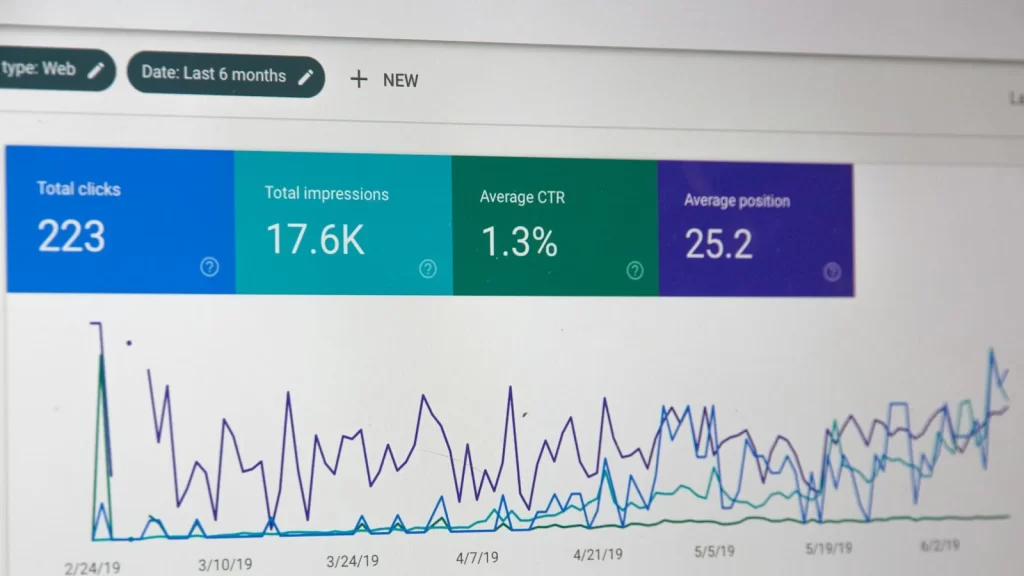
If you have just earned a few backlinks and the rankings have not budged, the question you are probably asking is simple: how long do backlinks take to work? The honest answer is that there is no fixed activation window. No credible source can promise that a link will lift your rankings in a set number of days or weeks, because a backlink is not a switch that flips at a predictable moment. It is one input into a system that includes crawling, indexing, processing, and a long list of competitive and on-page factors you do not control.
That framing matters, because the useful question is not "how many days until this works?" It is "which stage is my link in right now, and is anything actually blocking it?" Once you can answer that, patience stops being a vague virtue and becomes a diagnostic decision.
This guide walks through the four stages a backlink passes through, the factors that stretch or shorten the timeline, why your SEO tool can show a link while your rankings stay flat, and a practical workflow for tracking whether a link is doing anything at all.
How Long Do Backlinks Take to Work? The Honest Answer
flowchart TD
    S0["Start: how long do backlinks take…"]
    S1["1. Link goes live — the link now exists on…"]
    S0 --> S1
    S2["2. Discovery and crawling — a search engin…"]
    S1 --> S2
    S3["3. Link goes live"]
    S2 --> S3
    S4["4. Discovery and crawling"]
    S3 --> S4
    S5["5. Processing"]
    S4 --> S5
    Done["Outcome: How Long Do Backlinks Take to Work? The…"]
    S5 --> Done
There is no universal timeline for a backlink to affect rankings. Any promise of "X days to see results" treats a multi-stage, competitive process as a single mechanical event, and that is not how search works. What you can do is understand the stages and diagnose where a specific link currently sits.
There Is No Fixed Activation Window — Why "X Days" Promises Are Unreliable
Search engines do not publish an activation period for backlinks, and no third party can observe one reliably, because the outcome depends on the source site, the target page, the query, and the competition at the moment the link is processed. A link on a frequently crawled, well-trusted site may be discovered quickly, while the same link on a low-visibility page can sit untouched for a long time. Treat any fixed number as a marketing claim rather than a measurement.
The Real Question: Not "How Long?" but "Which Stage Is My Link In?"
A backlink moves through four broad stages:
- Link goes live — the link now exists on the source page.
- Discovery and crawling — a search engine finds and re-crawls the source page.
- Processing — the engine interprets the page, the link context, the target page, and how they relate to the wider site.
- Search performance change — ranking or visibility movement becomes possible (not guaranteed).
Knowing the stage tells you whether to wait, verify, or fix something. A link stuck at stage two is a crawling question. A link stuck at stage three is often a quality or indexability question. A link that has reached stage four but produced no movement is a competition, relevance, or on-page question.
A Quick Reality Check — Link Live in Your Tool vs. Google Knowing It Exists
The single most common misunderstanding is treating "my tool shows the link" as "Google knows about the link." A third-party crawler maintaining its own index is not the same as Google's crawler finding, crawling, and indexing the host page. The link can be perfectly live and clickable while Google has never seen the page it sits on.
Remember the three distinctions: "link is live" is not the same as "Google has discovered it"; "Google has discovered it" is not the same as "the link carries ranking value"; and "the link has value" is not the same as "rankings will move immediately."
The Four Stages of a Backlink's Lifecycle
Google describes crawling, indexing, and ranking as distinct stages, and notes that a page can be crawlable yet never indexed [1]. A backlink inherits that same pipeline: it only matters once the page hosting it enters the process.
Stage 1 — Link Goes Live (Existence, Not Discovery)
At this stage the link exists on the source page. That is all it means. It may be visible to you, to the publisher, and to third-party crawlers, but existence is not discovery. Nothing about search performance has been triggered yet.
Stage 2 — Discovery and Crawling (How Google Finds the Host Page)
Google is a fully automated search engine that uses programs called crawlers to explore the web constantly, looking for pages to add to its index [2]. For your link to be seen, Googlebot has to find and re-crawl the source page. If the source site is updated often and its pages are well linked internally, discovery tends to be faster. If the page is deep, rarely updated, or on a site with low visibility, discovery can take considerably longer.
Stage 3 — Processing (Understanding Context, Target Page, and Site Relationships)
Once the host page is crawled, the engine still has to interpret it: what the page is about, what the link's surrounding context signals, what the target page is about, and how the link fits into the broader relationship between the two sites. Crawling a link does not mean it is immediately weighed. Processing is where relevance and context are assessed, and it is not instantaneous.
Stage 4 — Search Performance Change (When Ranking Movement Becomes Possible)
Only after a link has been discovered, crawled, and processed can it plausibly contribute to a ranking change. Even then, whether rankings move — and by how much — depends on many other factors. This is the stage where "waiting" actually applies, and it is the stage most people jump to prematurely.
| Stage | What Happened | Signal You Can Observe | Common Misread |
|---|---|---|---|
| 1. Link Goes Live | Link appears on the source page | Tool or manual check shows the link | "The link is live, so it is already working" |
| 2. Discovery / Crawling | Engine finds and re-crawls the host page | Host page gets crawled; site: returns the host page |
"My tool found it, so Google has discovered it" |
| 3. Processing | Engine interprets page, link context, target page, and site relationships | Host page is indexed; link enters the link graph | "It was crawled, so it must count" |
| 4. Search Performance Change | Ranking or visibility may shift | Impressions, Average Position, and Clicks trend changes | "A few flat weeks means this link is worthless" |
7 Factors That Shape How Long Backlinks Take to Work
flowchart TD
    S0["Start: how long do backlinks take…"]
    S1["1. Quality beats quantity."]
    S0 --> S1
    S2["2. How often the source site is crawled is…"]
    S1 --> S2
    S3["3. A backlink only carries weight if the p…"]
    S2 --> S3
    S4["4. Your own page has to be in a position t…"]
    S3 --> S4
    S5["5. Rankings rarely move because of one iso…"]
    S4 --> S5
    Done["Outcome: 7 Factors That Shape How Long Backlinks…"]
    S5 --> Done
If there is no fixed timeline, there is still a set of variables that push the timeline one way or the other. Understanding them helps you set realistic expectations and spot problems early.
Source Site and Page Crawl Frequency
How often the source site is crawled is one of the strongest predictors of speed. A frequently updated, well-trusted site tends to get its new and updated pages discovered sooner, while a rarely updated or low-visibility site can delay discovery substantially. This is a crawl-priority and trust question more than a link-quality question.
Source Page Quality and Whether It Gets Indexed
A backlink only carries weight if the page hosting it is itself indexed and valued. Pages that are thin, orphaned, or low-priority to the engine may be crawled and then never indexed, which means the link effectively sits in limbo. Third-party tools can help you estimate this, but the definitive check is whether the host page appears in the search index at all.
Link Relevance, Placement, and Context
A link from a page whose topic relates to your target page carries more contextual meaning than a link dropped into unrelated content. Placement matters too: a link embedded naturally in the body of a relevant article reads differently from a link buried in a footer or a link list. Context is part of what processing evaluates.
Target Page Indexability, Keyword Competition, and Existing Authority
Your own page has to be in a position to benefit. If the target URL is not indexed, is blocked, or returns errors, no amount of link equity will register. Beyond indexability, the competitiveness of the target keyword and your site's existing authority both influence how much a single link can move the needle. A link that would be decisive on a low-competition query may be a drop in the bucket on a highly contested one.
Concurrent Content, Technical SEO, and Other Link Changes
Rankings rarely move because of one isolated event. If you are publishing new content, changing internal links, adjusting technical SEO, or earning other links at the same time, those changes interact. This is also why attribution is so difficult — more on that below. The practical takeaway is that the timeline you observe is the timeline of your whole campaign, not of one link in isolation.
Quality beats quantity. Google's John Mueller has stated that the total number of backlinks a website has "doesn't matter at all to the search algorithm," and that relevance and quality are what count [3]. That reframes the timeline question: it is not about how many links you have accumulated, but whether the specific links you earned are the kind that get crawled, indexed, and trusted.
Why Your Tool Detected the Backlink but Rankings Haven't Moved
This is the most common source of confusion, and it usually comes down to conflating two different systems: the crawler behind your SEO tool and Google's own pipeline.
Third-Party Crawlers Are Not Google — Different Indexes, Different Timelines
Tools such as Ahrefs, Semrush, and Moz maintain their own crawl and their own index, and their update cadence can differ from Google's. When a tool reports a new backlink, it is reporting that its crawler found the link. That is a useful signal, but it is not evidence that Google has crawled or indexed the host page, let alone assigned it value. The two systems can and do disagree for extended periods.
"Discovered," "Crawled," and "Indexed" Are Three Different States
Google's own URL Inspection tool distinguishes states such as "URL is not on Google," "Discovered — currently not indexed," "Crawled — currently not indexed," and "URL is on Google" (indexed) [4]. These are not cosmetic labels. A page can be discovered without being crawled, crawled without being indexed, and indexed without ranking. A backlink on a page that is "crawled but not indexed" has not yet entered the link graph in a way that can pass value.
An Unindexed Backlink Passes No PageRank — The "Uncashed Check" Analogy
If the host page is not indexed, the link it contains is effectively invisible to ranking systems. A useful mental model is a check that was written but never cashed: the link exists on paper, but nothing flows through it until the host page is part of the index. Practically, this means the first thing to verify when a link "does nothing" is not the link itself but whether the page carrying it is indexed. You can check a host page quickly with a site: query such as site:example.com/the-guest-post-slug — a result suggests it is indexed; no result suggests it is not.
Why Measuring a Single Backlink's Impact Is So Difficult
Even when a link is live, crawled, indexed, and processed, isolating its contribution to a ranking change is close to impossible. Understanding why prevents you from drawing the wrong conclusion from flat or improving numbers.
Rankings Move for Many Reasons at Once — Attribution Is Not Clean
Rankings are influenced by content quality, internal linking, competitor activity, algorithm updates, and other backlinks — all at the same time. If your position improves the week after a link goes live, you cannot honestly credit that link, because several variables may have shifted together. Likewise, a flat week does not prove the link is worthless.
Read the Trend of a Group of Quality Backlinks, Not One Link
Because single-link attribution is unreliable, the more meaningful signal is the trend between a group of quality backlinks and your target page's performance over a longer horizon. A rising trajectory in impressions and average position alongside a growing set of relevant, indexed links is far more informative than any one link's immediate effect.
What You Can and Cannot Conclude From a Few Weeks of Data
A few weeks of data can tell you whether a link is live, whether the target URL is correct, and whether the host page is indexed. It generally cannot tell you whether the link has delivered ranking value, because processing and competition effects are still unfolding. Do not let short-term rank fluctuation drive a conclusion about a link's worth.
A Practical Workflow to Diagnose and Track Backlink Performance
Rather than simply waiting, run a short, repeatable diagnostic after each placement. This turns "how long do backlinks take to work" into a checklist you can actually act on.
The Post-Placement Checklist — Verify Link, URL, Attributes, and Indexability
- Confirm the link is still live — not deleted or swapped to
nofollow. - Check the target URL is correct — no 404s, no unintended redirects, no broken parameters.
- Check link attributes and page status —
dofollowvsnofollow, host page returns 200, nonoindexor robots block. - Confirm the target page itself is indexable — use Search Console's URL Inspection or a
site:check. - Check whether the source page is being crawled and indexed — use
site:example.com/the-guest-post-slugwhen you do not control the source. - Record a baseline for the target keyword and page — Impressions, Clicks, Average Position, Organic Traffic, Referring Domains.
- Observe the trend over a reasonable window, not daily noise.
- Evaluate the whole link building campaign, not one link in isolation.
Source-Site Type vs. Expected Crawl/Index Cadence vs. Diagnostic Action
| Source Site Type | Expected Crawl / Index Cadence | If Overdue, Diagnose By |
|---|---|---|
| Large, frequently crawled, trusted site | Often discovered/indexed within days | Verify the link is still live, the target URL is correct, and it is not nofollow |
| Mid-size site, updated fairly regularly | Weeks is a normal range | Use a site: query on the host page; confirm no noindex or robots block |
| Small site, rarely updated, deep page | Can be much longer, sometimes never | Suspect host-page quality first (thin or orphaned); assess whether it is worth waiting |
| Thin / orphaned / weak host page | May never be indexed | Do not wait — treat the link as producing no value and adjust your placement strategy |
Which Metrics to Watch (and Why Not to Judge on Daily Rank Fluctuations)
Track target-page Impressions, Clicks, Average Position, and Organic Traffic, plus Referring Domains and target-keyword ranking trend. These give a directional read over weeks, not days. Daily rank movement is largely noise; reacting to it will push you toward premature conclusions about links that simply have not finished processing.
When to Worry — Diagnosing the Root Cause Instead of Just Waiting
There is no universal "worry date," but there is a clear diagnostic logic:
- If the link has been live for a long time and the target page has indexation problems, weak content competitiveness, a search-intent mismatch, or the link quality is low — waiting will not fix it. Address the root cause.
- If the page and the link are both in good shape — judge by the whole campaign and a longer trend rather than expecting a single link to produce an instant result.
The trigger for action is "is the state healthy and is the trend improving?", not "how many days have passed?"
Setting the Right Expectation and Your Next Step
Link building is better understood as long-term accumulation than as a set of independent buttons that each produce a fixed ranking gain on a fixed schedule.
Three Distinctions to Remember (Live ≠ Discovered ≠ Valuable ≠ Ranked)
- A backlink being live does not mean Google has discovered it.
- Google having discovered it does not mean the link carries ranking value.
- The link carrying value does not mean rankings will change immediately or observably.
Hold these three lines and most of the anxiety around timelines resolves into a set of checkable questions.
Treat Link Building as Long-Term Accumulation, Not a Fixed-Button
The value of a link building program shows up in the trend between a growing set of relevant, indexed, high-quality backlinks and your target pages' performance over time. That is a portfolio effect, not a per-link event. When clients ask about timelines, the honest and useful framing is that link building typically takes months to show measurable impact — and the right response is to look at where the campaign stands now rather than to promise a date.
Next Step — Review Your Campaign as a Whole, Not One Link at a Time
Instead of auditing a single link for an instant verdict, review your whole campaign: how many links are actually indexed, how relevant they are to your target pages, and how your target pages' impressions and positions are trending. If you want help building a compliant, content-driven backlink program that is designed for sustainable growth rather than short-term spikes, you can explore TraffiClimb's link building services and see how a strategic partner approaches premium placements.
FAQ
Q: How long do backlinks take to work?
A: There is no fixed timeline. A backlink has to be discovered, crawled, processed, and only then can it plausibly influence rankings — and even then, movement depends on competition, relevance, and your site's existing authority. Treat any promised number of days or weeks as unreliable.
Q: Why does my SEO tool show a backlink but my rankings haven't changed?
A: Because your tool's crawler and Google's pipeline are different systems. A tool reporting a link only proves that its own crawler found it, not that Google has crawled or indexed the host page. The link may still be at the discovery or unindexed stage.
Q: Does a live backlink pass value immediately?
A: No. If the page hosting the link is not indexed, the link passes no ranking value regardless of how live or clickable it is. Verify that the host page is indexed before expecting any effect.
Q: How can I tell if a backlink is actually being counted?
A: Check that the link is still live and dofollow, that the target URL is correct, that the target page is indexable, and that the host page is indexed (for example, with a site: query). If the host page is not indexed, the link is not yet contributing.
Q: Should I worry if a backlink shows no effect after a few weeks?
A: Not necessarily. A few weeks may be too early, and single-link attribution is unreliable because many factors move rankings at once. Diagnose the state — indexability, relevance, link quality, search-intent match — rather than judging on elapsed time alone.
Q: Do more backlinks make rankings rise faster?
A: Not in a simple way. Google's John Mueller has said the total number of backlinks a site has does not matter to the search algorithm; relevance and quality are what count [3]. A handful of relevant, indexed links can matter more than many weak ones.
Q: What should I track instead of a single link's ranking effect?
A: Track the trend between a group of quality backlinks and your target pages — Impressions, Clicks, Average Position, Organic Traffic, and Referring Domains — over a longer window, and evaluate the campaign as a whole rather than one link at a time.
References
Google Search Central — In-Depth Guide to How Google Search Works —— Explains that crawling, indexing, and ranking are distinct stages and that a page can be crawlable yet never indexed.
Google Search Central — SEO Starter Guide —— Describes Google as a fully automated search engine that uses programs called crawlers to explore the web and find pages for its index.
Search Engine Journal — Google's John Mueller: Total Number of Backlinks Doesn't Matter —— Mueller states the total number of backlinks a website has doesn't matter to the search algorithm and that quality over quantity is what counts.
Google Search Console Help — URL Inspection Tool —— Documents the distinct index states a URL can be in, including discovered-but-not-indexed and crawled-but-not-indexed.