
Referring Domains: What They Are and How They Differ From Backlinks

What a Referring Domain Is
A referring domain is the unique site behind one or more links to your page. When five links come from the same domain, that domain counts once; when five links come from five different sites, you have five referring domains. Search engines use links among the signals that decide which pages deserve visibility [1], and the set of referring domains is the part of that signal that measures breadth rather than volume.
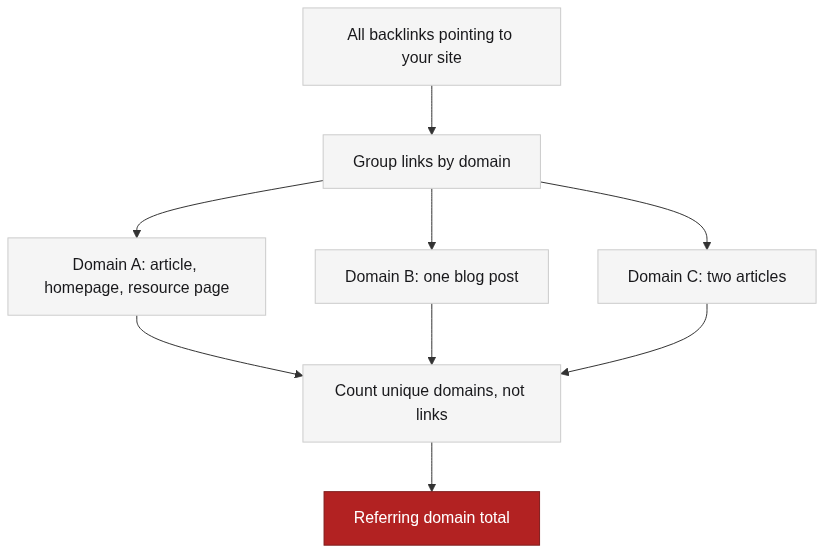
The term describes the domain, not the exact page. A link from an article, a homepage, and a resource page on the same site still represents a single referring domain. That is why audits separate the two numbers and why the difference matters for how you plan link building.
Referring Domains vs. Backlinks: The Core Difference
A backlink is one link from one page to another [2], while a referring domain is the site that hosts it. The difference is one of grouping: backlinks count individual connections, and referring domains count unique sources. A profile with ten thousand backlinks from fifty domains is less diverse than one with five hundred backlinks from three hundred domains.
Diversity is the reason the distinction exists. Backlinks from many domains suggest that different publishers independently decided your content was worth linking to, which is harder to manufacture and easier to defend. Links concentrated in a few domains show depth in a small number of relationships, which can be valuable but does not demonstrate broad interest.
Why Referring Domain Count Matters More Than Raw Link Count
Referring domain count is a better proxy for breadth because it resists the effects of a single heavy source. One active campaign can generate hundreds of links from a handful of domains, and the raw count makes the profile look stronger than it is. The domain count reveals the underlying spread, which is the part of the profile that reflects genuine reach.
Treat the count as a directional indicator, not a target. Two profiles with identical domain counts can differ in quality when one earns links from relevant publishers and the other from link lists, and related coverage in this cluster goes deeper into how relevance and risk shape that quality [3]. The pillar guide to high-quality backlinks shows where domain count fits inside the full evaluation framework.
What a Diverse Referring Domain Portfolio Looks Like
A diverse portfolio mixes sources that a reader of your content would recognize: industry publications, established blogs, directories that matter in your niche, and sites your audience already visits. The mix matters more than the total, because each source type reaches a different group and supports a different kind of trust. A portfolio built entirely from one source type is exposed when that channel changes.
Diversity also means no single domain carries the profile. When one site accounts for most of your links, the relationship is worth more than the numbers suggest, and losing it would change the profile visibly. The backlink profile guide explains how to read that balance from the whole set.
How to Evaluate Referring Domain Quality
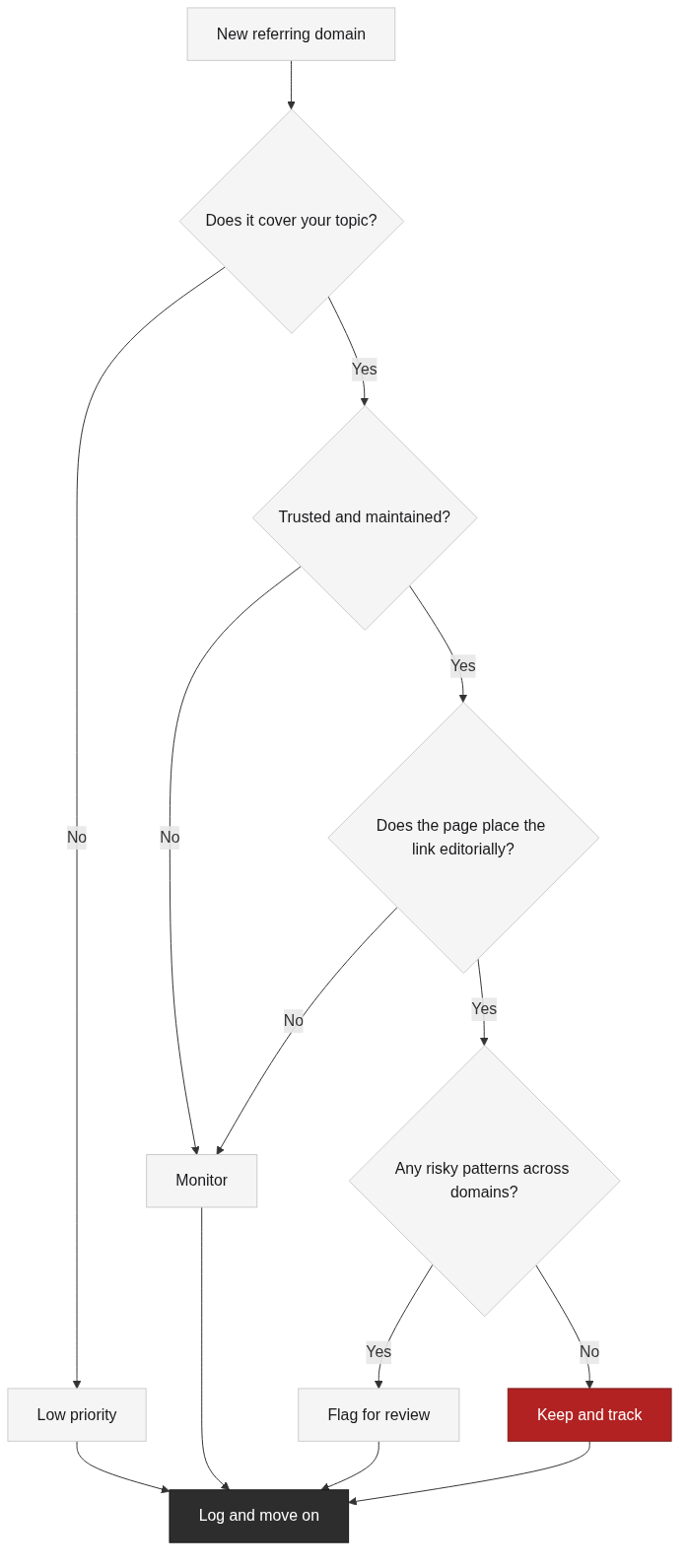
Judge each referring domain the way you would judge a link: relevance, authority, trust, and placement. A domain that covers your topic and publishes consistently is worth more than a strong domain with no topical connection, and the relevant backlinks guide walks through that layered check in detail.
Look for patterns across the domain set, not just individual scores. A cluster of new domains appearing in the same week, a group of domains that all link to each other, or a set of sites with the same template are signs worth investigating. When a pattern points to risk, the link reclamation guide covers what to do with the links that stop being worth keeping.
How to Grow Your Referring Domain Portfolio
Grow the portfolio by expanding the number of distinct sources, not by adding more links to the same sites. Each method earns links from different kinds of domains, and the mix is what builds diversity: guest posting adds editorial domains, broken link building adds sites that maintain resource pages, and content-led outreach adds publishers who link naturally [4]. The guest posting guide and the broken link building guide show how the two methods find different sources.
Track the portfolio as a separate metric from backlink volume. Log every new referring domain, note the source type and the page it linked from, and review the growth by source type rather than by total count. That review is where you notice that one channel is doing all the work before it becomes a risk.

Referring Domains in Your Link Profile
Referring domains are one dimension of the link profile, alongside velocity, anchors, and link types, and the dimensions are read together. A healthy profile grows its domain count in step with publishing activity, from sources that vary in type and relevance. The link building strategies guide ranks the methods by how they contribute to that growth.
Avoid the trap of chasing the number alone. Buying links from many weak domains inflates the count while adding risk, and the kind of pattern Google’s spam policies describe as link spam [5] is exactly what a domain count can hide. Grow the number by growing the reasons publishers have to link, and let the count follow the work.
FAQ
References
Google, “SEO Starter Guide,” developers.google.com. Official documentation describing links among the signals that help pages gain visibility.
Moz, “Backlinks,” moz.com. Public glossary explaining what backlinks are and how they relate to referring domains.
Ahrefs, “Link Building for SEO: The Definitive Guide,” ahrefs.com. Public industry guide describing how referring domains and relevance shape link profile quality.
Search Engine Journal, “Link Building Strategies,” searchenginejournal.com. Public industry article surveying methods that earn links from different source types.
Google Search Central, “Spam policies for Google web search,” developers.google.com. Official documentation describing link spam practices that Google treats as policy violations.
Next Steps
Referring domains measure the breadth of your link profile, and they matter more than raw backlink counts because they reveal how many independent sources chose to link to you. Judge each domain for relevance and trust, watch for patterns across the set, and grow the portfolio with methods that earn links from different kinds of sites. Related coverage in this cluster goes deeper into high-quality backlinks, backlink profiles, and relevant backlinks, and each article reads the same profile from a different angle.
If you prefer to focus on the strategy while a specialist handles execution, TraffiClimb builds premium link building programs for ambitious brands.