
Unlinked Mentions: How to Turn Brand Mentions Into Backlinks

What Unlinked Brand Mentions Are
A backlink is a link from one page on another website [2], and an unlinked mention is that same page without the link. The site references your brand by name, quotes your content, or covers your product, but the text is not hyperlinked. The page already made the editorial decision to include you, so the ask is smaller than a cold pitch. Links remain one of the signals search engines use to decide which pages deserve visibility, which is why Google’s SEO starter guide still lists them among the factors that help a page become important [1].
The method is deliberately narrow: it only adds a link to an existing mention. It is not link reclamation, which recovers links that used to point to your site and disappeared, and it is not broken link building, which finds dead pages on other sites and offers your content as a replacement. The link reclamation guide covers the recovery side, and this page covers mentions that never linked in the first place.
When Unlinked Mention Outreach Is Worth the Effort
Unlinked mention outreach works best when you already have a stream of mentions to work with. Brands with published research, strong founder profiles, or regular press coverage accumulate mentions across blogs, newsletters, and industry roundups. A brand with almost no mentions has little to convert, and the effort is better spent on methods that create new coverage.
The method is a weak fit when the mention is negative, when the page never links to any source, or when you have no relevant page on your site to point to. Mentions on high-traffic pages matter more than mentions on pages nobody reads, and the same triage applies to every list you build. The pillar guide to link building strategies shows where mention conversion sits next to the other methods in the cluster.
How to Find Unlinked Mentions
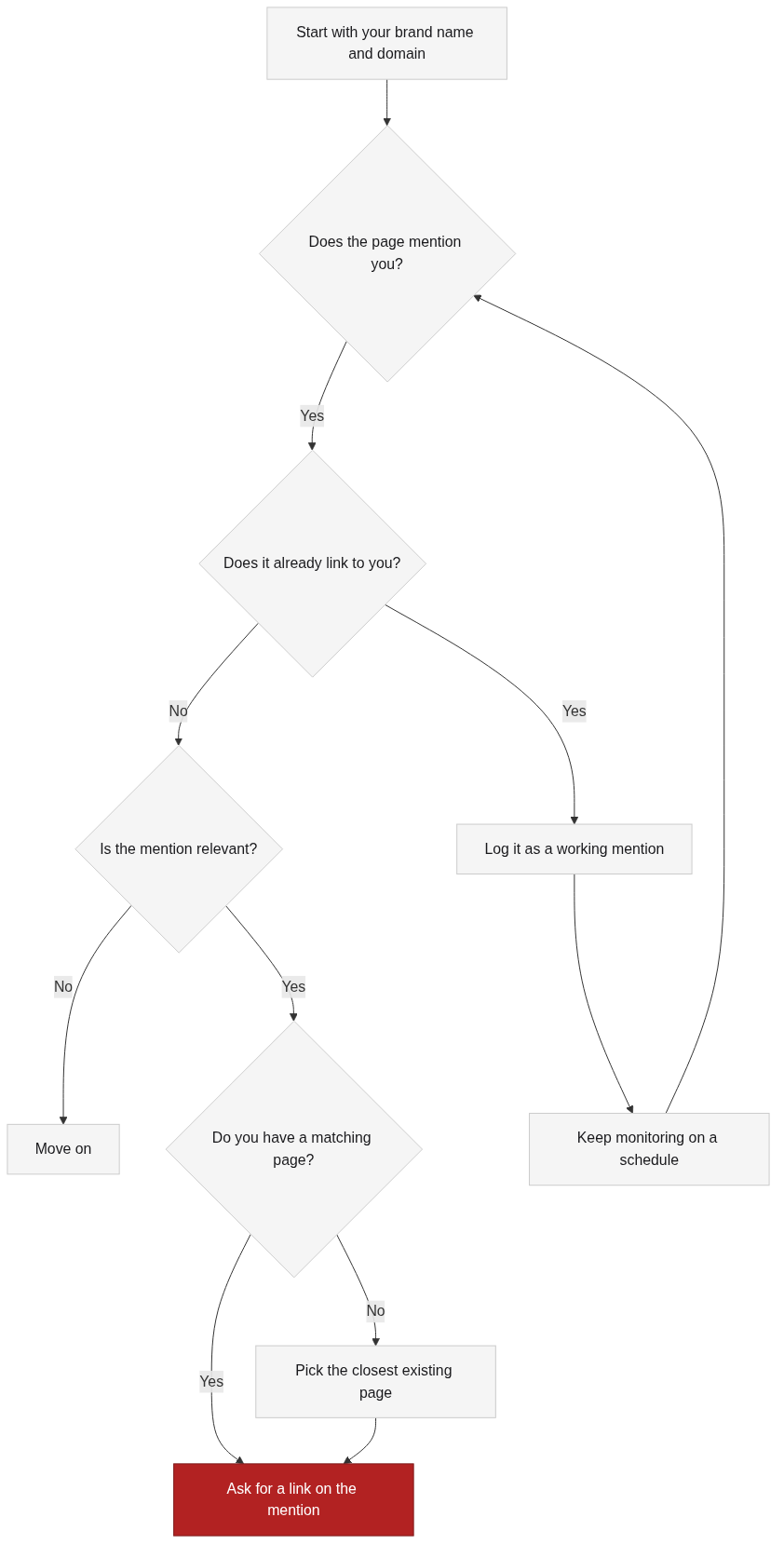
Start with search and monitoring, not with memory. Search for your brand name and your domain together, then filter out pages that already link to you. Look for three patterns: pages that mention your brand in the text but have no link, pages that link to competitors but not to you, and roundups or resource lists that left you out.
The first pass is a triage, not a full campaign. Split the list by relevance and authority: mentions on industry blogs and comparison pages matter more than mentions buried in transcripts or social-only posts. That triage decides where your outreach time goes, and it is the step most teams skip when they open a search results page and start emailing everyone at once.
How to Turn a Mention Into a Backlink
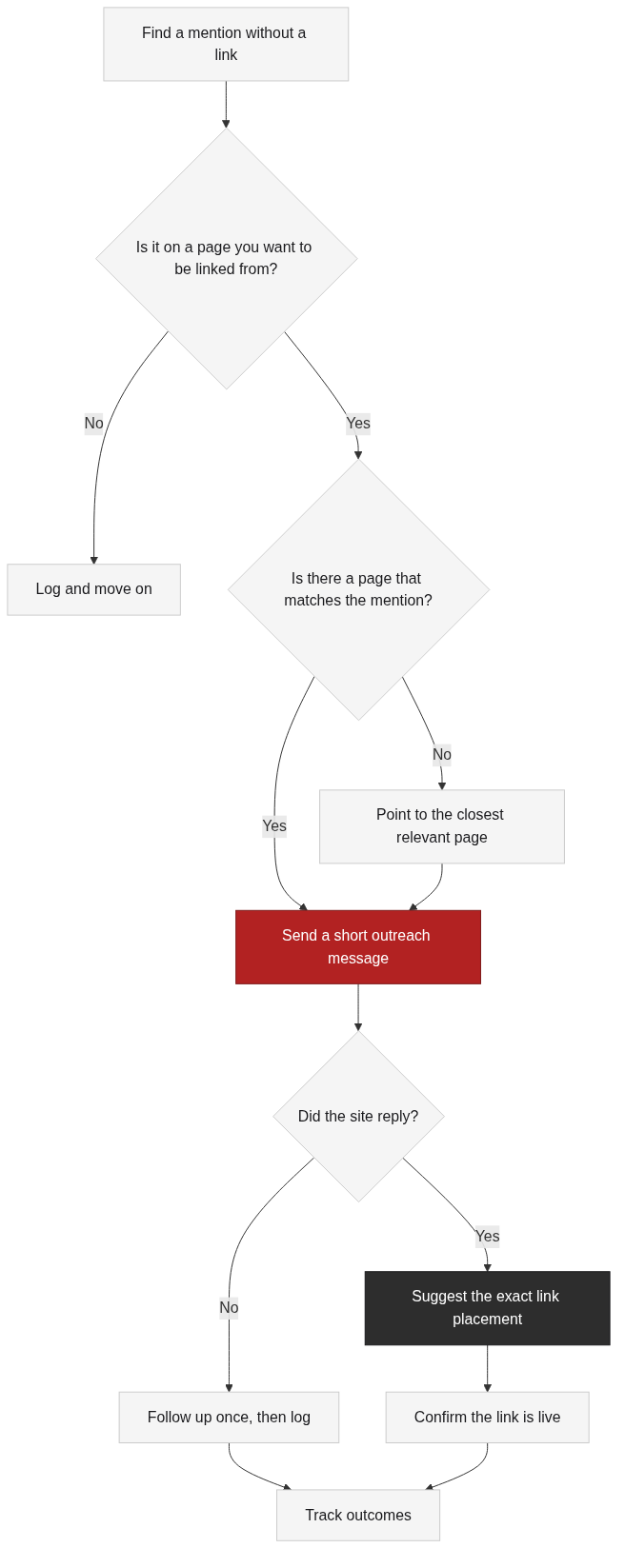
Conversion is a short outreach loop with one clear ask: add a link to the mention and point it at the page that matches what the mention is about. Before you contact anyone, confirm the target page is ready. If the mention quotes your data, link to the page that contains it; if it reviews your product, link to the product page; if it lists industry resources, link to your best guide on that exact topic.
When the page is ready, contact the site with a one-line context, the exact link to add, and the anchor text you suggest. Keep the message short and make the fix trivial for the site owner. Editors add links to mentions because it makes their page more useful, so the pitch is simply helping them do that [3].
Mistakes That Make Mention Outreach Fail
The most common mistake is treating every mention the same. A generic pitch that asks for a link without showing you read the page gets ignored, and an anchor text suggestion that matches the wrong page makes the editor do the thinking for you. Relevant mentions deserve a specific ask; the rest deserve nothing.
Two more mistakes are quieter. Chasing mentions on pages that never link to sources wastes time that could go to a page that already links to competitors, and treating an unlinked mention like a lost link leads to pitches that fit neither situation. Log the low-value cases and revisit them when your content changes.

How to Measure Unlinked Mention Results
Track the same numbers you would track for any link campaign: mentions found, links earned, and referral traffic from the pages that added your link. A mention is converted when the link is live, points to the right page, and sits in a context that makes sense to readers [4]. The conversion rate matters more than the raw count, because a link on a page nobody reads is worth less than one in a relevant context.
Compare converted mentions against each other over a few months and use the pattern to decide which pages and topics deserve follow-up [5]. If the same type of page keeps mentioning you without linking, fix the underlying cause, such as a missing resource page or an outdated product URL, instead of re-running the same outreach.
FAQ
References
Google, “SEO Starter Guide,” developers.google.com. Official documentation describing links among the signals that help pages gain visibility.
Moz, “Backlinks,” moz.com. Public glossary explaining what backlinks are and why relevance matters.
Ahrefs, “Link Building for SEO: The Definitive Guide,” ahrefs.com. Public industry guide describing link audits and outreach as part of link building.
Backlinko, “Link Building Strategies,” backlinko.com. Public industry guide covering proven methods, including mention conversion.
Search Engine Journal, “Link Building Strategies,” searchenginejournal.com. Public industry article surveying link building methods and their trade-offs.
Next Steps
Unlinked mention outreach is a steady process: find the mentions that do not link to you, triage by relevance, and ask for the link with the right page ready. It pairs naturally with the other methods in the cluster, and the pillar guide shows where it fits beside guest posting, niche edits, and the rest. When a mention comes from a journalist, the digital PR playbook explains how to turn coverage into links. And when a mention used to link to you, the link reclamation guide covers recovering the links that disappeared.
If you would rather focus on the strategy while a specialist handles execution, TraffiClimb builds premium link building programs for ambitious brands.