
Link Building Strategies: 9 Proven Methods That Work in 2026

Why Link Building Strategies Still Matter in 2026
Links remain one of the signals search engines use to decide which pages deserve visibility. Google’s SEO starter guide still lists links among the factors that help a page become important [1], and Moz describes backlinks as links from one page on another website [2]. None of that changed in 2026.
What changed is the quality bar. Search engines ignore or discount links that look manufactured, and publishers have learned to reject pitches that offer nothing to their readers. A handful of contextual links from relevant pages now outweighs a large number of weak ones, which means the method matters more than the volume.
The practical consequence is simple: judge every strategy by who links and why, not by the count. That is why the methods below focus on relevance, context, and audience fit rather than tricks.
How to Choose a Link Building Strategy
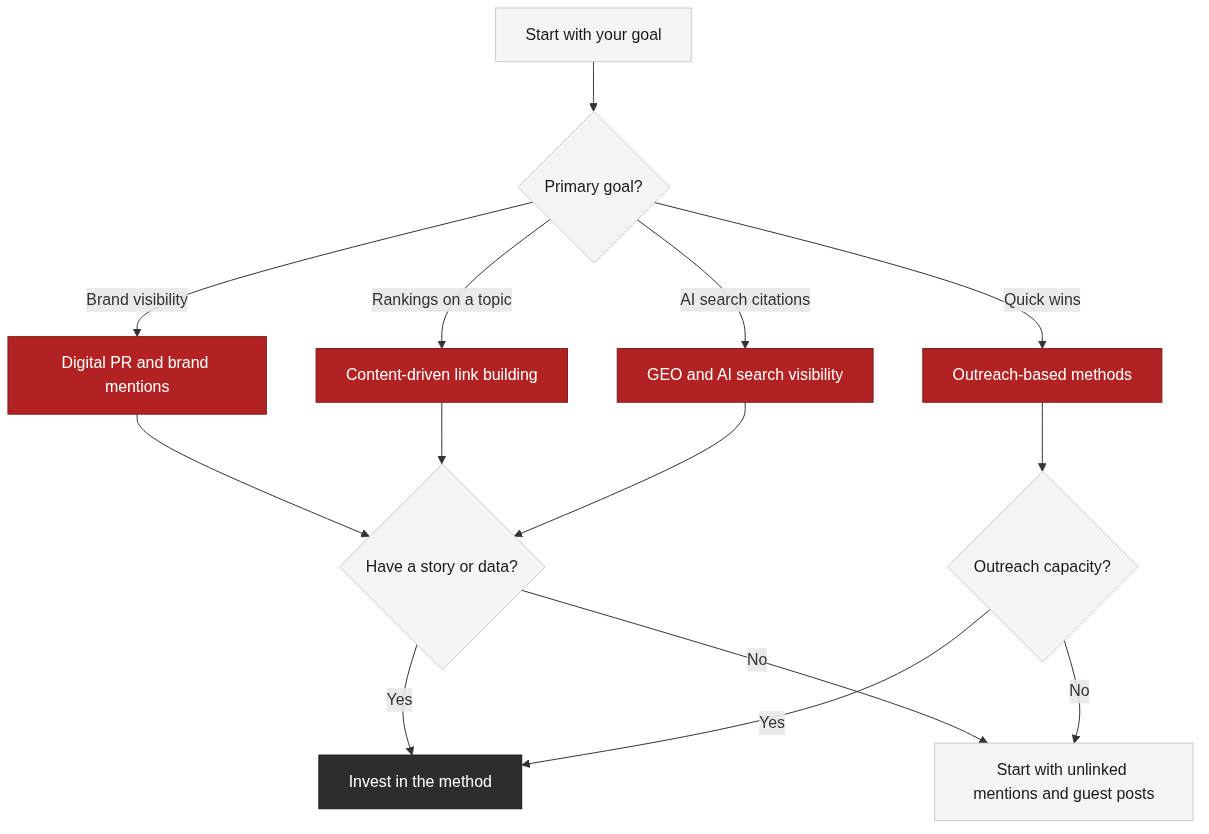
Start with three questions before you look at tactics. What outcome do you need, such as brand visibility, rankings for a topic, or referral traffic? What can you produce, such as original content, expert commentary, data, or a useful tool? And how much outreach capacity do you have, in-house or through a provider? The flowchart below maps those answers to strategy families.
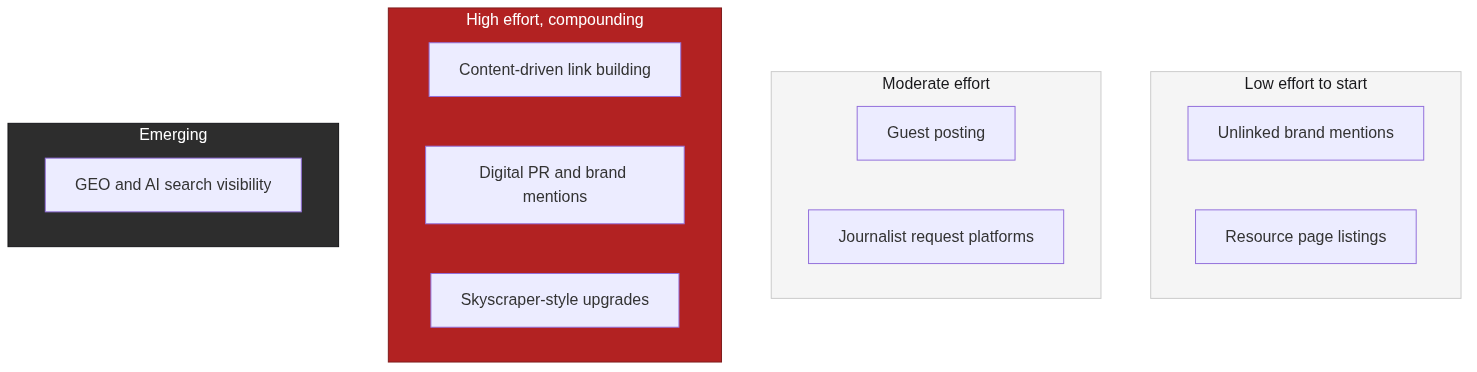
Most teams should begin with one low-effort method and one that builds a durable asset. Unlinked mention outreach and guest posting are the easiest pair to start with, while content-driven link building and digital PR hold most of the long-term upside. The common mistake is skipping the cheap tests and launching a heavy program before the basics are in place.
1. Content-Driven Link Building
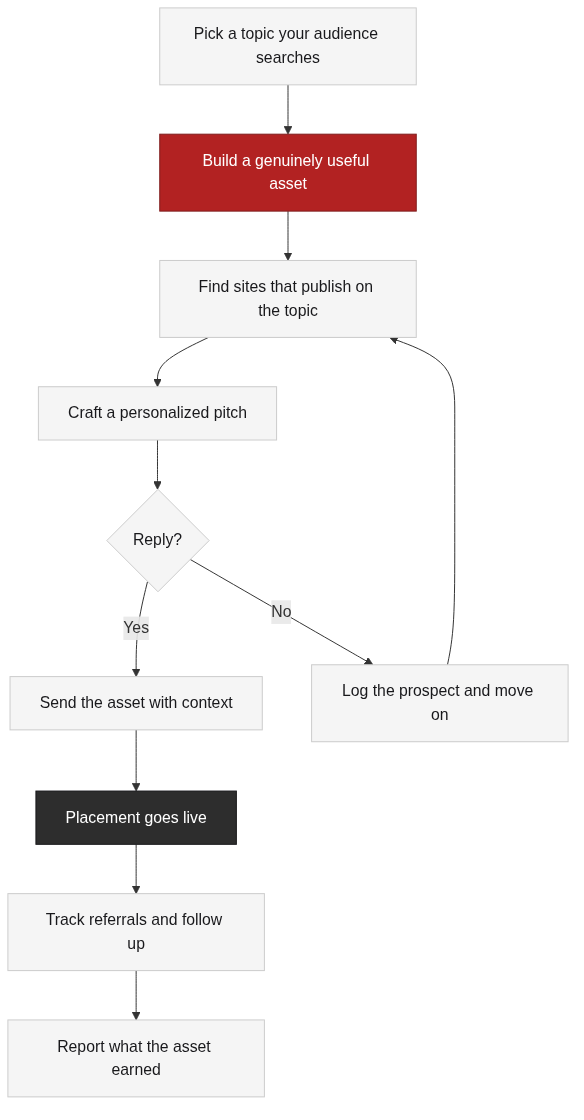
Content-driven link building earns links by publishing something other sites genuinely want to reference: an original guide, a dataset, a working template, or a well-tested opinion. Ahrefs’ link building guide describes this as creating content that is naturally linkable and then promoting it [3]. The asset is the reason the link exists, so the quality bar is the whole method.
Best for teams with writing capacity and a topic they know well. Weak fit for sites that can only repackage existing sources, because other publishers will choose the original. The boundary is distribution: content alone does not earn links, and you still have to find the right pages, contact the right people, and follow up.
2. Digital PR and Brand Mentions
Digital PR gets your brand mentioned and linked in coverage by journalists, newsletters, and industry sites. The strongest placements start with something newsworthy, such as original data, a genuinely useful expert comment, or a story that fits a publisher’s audience. Mentions often come first, and links follow when the coverage references your site.
Best for brands with a story, a dataset, or a credible expert. Weak fit for teams that cannot produce anything new, because recycled angles rarely earn placements. It also needs patience: most programs take repeated attempts before coverage becomes regular.
3. Guest Posting on Authoritative Sites
Guest posting contributes a useful article to a site with an established audience and earns a contextual link back in exchange. When the host site is relevant and the article is genuinely helpful, the link arrives in an environment where readers are already interested in your topic.
Best for new sites that need topical authority quickly and B2B brands that can produce specialist articles. Weak fit for teams that cannot meet a host’s editorial bar, or that turn to low-quality networks, which search engines discount and reputable agencies refuse. Check the host’s audience, editorial standards, and link placement before you pitch.
4. Resource Page Link Building
Resource pages are curated lists such as “best SEO tools for small teams” or “free guides for content marketers.” Resource page link building gets your page listed when it genuinely belongs on that list. The win is a relevant, contextual link with minimal new content to produce.
Best for tools, templates, and reference-style pages. Weak fit for pages that duplicate what the list already covers, because editors drop entries that add nothing. Volume is low and each placement is a single link, so treat this as a supporting strategy rather than the core of a campaign.
5. Unlinked Brand Mention Outreach
Some sites mention your brand without linking to it, such as in a product roundup, a review, or a directory listing. Unlinked brand mention outreach finds those mentions and asks for a link where the page would genuinely benefit. It is the cheapest strategy here because the content already exists.
Best for brands that already get mentioned, especially product companies and agencies. Weak fit for brands with almost no mentions yet, because there is little to work from. The boundary is politeness: only ask when a link improves the page, and never push for a link on an irrelevant mention.
6. Broken Link Building
Broken link building finds links on relevant pages that no longer work and offers your working resource as a replacement. The pitch is unusually easy to understand: the site owner gets a fixed page, and you get a link that fits the context.
Best for teams with solid content and at least some outreach patience. Weak fit for teams that cannot produce a replacement as good as the original page, because the swap only works when it is a real improvement. Reply rates are low, so treat it as a numbers game and keep a steady pipeline of candidates.
7. Journalist Request Platforms
Journalist request platforms connect writers with experts who answer questions about their field. When your quote is used, the story often links to your site as the source of the expertise. The format became widely known through Help a Reporter Out, and similar services still exist under different names [5].
Best for genuine subject-matter experts who can answer quickly and precisely. Weak fit for teams that forward every question to someone else, because speed decides most placements. Competition for good questions is high, so expect a low hit rate and treat each answer as an investment in relationships, not a guaranteed link.
8. Skyscraper-Style Content Upgrades
Skyscraper-style upgrades start with the strongest content that already earns links on your topic, build a version that is clearly more useful, and then contact the sites that linked to the original. The technique was introduced in Backlinko’s link building guide and remains a repeatable pattern for topics with proven demand [4].
Best for teams with research or production capacity who want to win a competitive topic. Weak fit for teams that can only restyle the original page, because publishers have seen that pitch before. The improvement must be measurable, such as more data, better examples, or a working tool, not just a new design.
9. GEO and AI Search Visibility
Generative search engines answer questions by citing sources, and being named and described accurately in credible coverage increases the chance that your brand appears in those answers. GEO and AI search visibility treats third-party mentions and links as the raw material for those citations, and it overlaps with digital PR more than with raw link counts.
Best for brands whose buyers research through AI assistants. Weak fit for teams that expect a direct, link-based ranking payoff, because citation behavior is still evolving and not directly controllable. The safe investment is the same as everywhere else: earn accurate coverage on relevant sites and keep your brand description consistent.
Building Your First Strategy
If this is your first serious attempt, do not plan all nine at once. Pick one audience-aligned method that produces a durable asset and one outreach method you can run consistently, then measure links earned, referral traffic, and the quality of the sites that link. Expand only after the basics produce results you can explain.
Teams that want to move faster often start with a provider that handles execution end to end. TraffiClimb focuses on premium, content-driven link building for ambitious brands, and its site describes the approach in more detail.
FAQ
References
Google, “SEO Starter Guide,” developers.google.com. Official documentation describing links among the signals that help pages gain visibility.
Moz, “Backlinks,” moz.com. Public glossary explaining what backlinks are and why they matter.
Ahrefs, “Link Building for SEO: The Definitive Guide,” ahrefs.com. Public industry guide describing link-worthy content and its promotion.
Backlinko, “Link Building Strategies,” backlinko.com. Public industry guide that introduced the skyscraper technique.
Search Engine Journal, “Link Building Strategies,” searchenginejournal.com. Public industry article covering a range of link building methods.
Plan Your Link Building Strategy
If you would rather focus on the strategy and let a specialist handle execution, TraffiClimb builds premium, content-driven link building programs for ambitious brands.